Shinjuku Gyoen Park: 6 Things to Know Before You Go
It’s Closed Every MondayThe Gate Closes 30 Minutes Before Official Closing Time
Shinjuku Gyoen is closed every Monday, and if Monday falls on a public holiday, the park closes the following weekday instead. In addition, the gate closes 30 minutes before the official closing time, and staff begin clearing the grounds promptly, so arriving late significantly reduces your visit time. If your Tokyo itinerary is tight, avoid scheduling this park on a Monday and plan to arrive at least 2–3 hours before closing to make the entry fee worthwhile.
🕒 Shinjuku Gyoen Opening Hours
| Period | Opening Hours | Gate Closes |
| Oct 1 – Mar 14 | 9:00 – 16:30 | 16:00 |
| Mar 15 – Sep 30 (except Jul 1 – Aug 20) | 9:00 – 18:00 | 17:30 |
| Jul 1 – Aug 20 | 9:00 – 19:00 | 18:30 |
🚫 Closed Days
| Type | Details |
| Weekly Closure | Every Monday |
| If Monday is a Public Holiday | Closed on the following weekday instead |
| Year-End Closure | December 29 – January 3 |
🌸 Special Open Periods (No Monday Closure)
| Period | Notes |
| March 24 – April 24 | Cherry blossom season (very crowded) |
| November 1 – November 15 | Autumn foliage peak |
Planning Tips:
- The gate closes 30 minutes before official closing time.
- Arrive at least 2–3 hours before closing to fully explore the park.
- Avoid scheduling your visit on a Monday unless it falls within a special open period.
- Always check the official website before your visit, as opening hours and entry policies may change depending on the season or special events.
It’s Not a Free Public ParkThere’s a ¥500 Entry Fee for General Admission
Admission costs ¥500 for adults (¥400 for groups of 30 or more), ¥250 for seniors (65+) and students, while junior high school students and younger enter free. Tickets can be purchased at the entrance on the same day without advance booking, and payment methods typically include cash and IC cards. While online E-tickets via “Asoview!” are recommended during peak seasons to ensure smoother entry.
Planning Tips:
- Consider arriving early in the day to make the ¥500 entry fee worthwhile, especially if you plan to explore the entire garden.
- During peak sakura season, advance online tickets via Asoview are strongly recommended due to crowd control and long entry lines.
Cherry Blossom Season Is the Most Popular Time to VisitExpect Higher Visitor Numbers and Longer Wait Times
Cherry blossom season is when Shinjuku Gyoen feels most lively and photogenic, but it’s also the busiest period of the year. You may encounter longer lines at the entrance, crowded photo spots, and busier restrooms, especially on weekends. In some peak periods, reservations or timed entry may apply to manage visitor flow. To enjoy a calmer experience, consider visiting right at opening time (9 AM) or choosing a weekday instead of a weekend.
Can You Picnic and Are Trash Bins Available?Food Is Allowed, Alcohol Is Prohibited, and Trash Bins Are Limited
You’re welcome to bring your own food and enjoy a picnic in the garden, and many visitors do so, especially during cherry blossom season. However, alcohol is prohibited throughout the park, and smoking is not permitted anywhere inside the grounds. Trash bins are limited and mainly located near café areas and entrance gates, so it’s best to bring a small bag to carry your waste with you. The park is well maintained, and responsible waste handling helps keep the environment clean and enjoyable for everyone.
Planning Tips:
- Bring a picnic mat or small blanket if you plan to relax on the lawn.
- You’re welcome to bring your own food to enjoy inside the park.
- Carry a small disposal bag for your trash, and dispose of it properly when you find designated bins near café areas or entrance gates.
How Long Should You Spend at Shinjuku Gyoen?Most Visitors Spend 2–3 Hours or More
Shinjuku Gyoen works well as a slower-paced day in your Tokyo itinerary, especially after several busy sightseeing days. The garden’s open lawns, ponds, and walking paths make it ideal for a relaxed stroll or simply sitting down to enjoy a picnic meal. If you plan to bring food and spend time eating on the grass, allow yourself at least 2–3 hours for a comfortable pace. Those who enjoy photography, exploring different garden sections, or visiting the greenhouse may find themselves staying even longer.
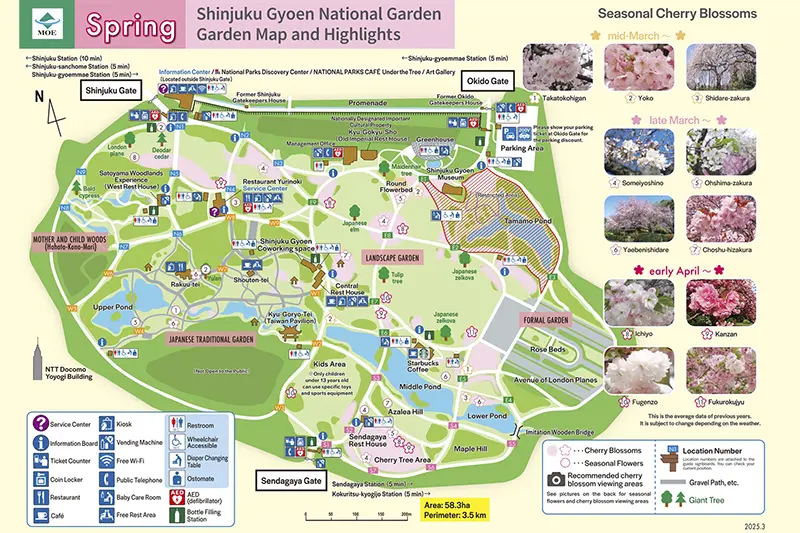
Garden Map and Facilities GuideFind Restrooms, Cafés, and Key Areas Before You Explore

The garden map clearly highlights essential facilities such as restrooms (including wheelchair-accessible toilets), diaper changing tables, nursing rooms, cafés, vending machines, rest houses, and bottle filling stations. These amenities are distributed across different sections of the park, which makes longer visits more comfortable for families, elderly visitors, or anyone planning to spend several hours inside. Before you begin exploring, it’s helpful to check the nearest restroom or café relative to your entry gate, especially during peak seasons when walking distances can feel longer than expected.
The map also highlights recommended walking themes to help visitors focus their exploration based on season or interest. In spring, the Cherry Blossom Course guides you through key sakura viewing areas. During autumn, marked Autumn Leaves Spots help you locate the best foliage views. If you prefer a quieter, nature-focused walk, the Giant Tree & Forest of Japanese Mountain Villages Course offers a more shaded and tranquil route. Families visiting with children may find the designated Fun Spots for Families areas more suitable for relaxed breaks and open play. Using these suggested routes can help you prioritize sections of the park, especially if your visit time is limited.